Singing Bowls Help Heal
This article is intended to increase awareness of domestic violence, as part of the Drive Out Domestic Violence campaign in July. Children’s Home Shelter for Family Safety, along with sponsor Vern Eide, runs this social-media based campaign to help the community understand domestic violence and to encourage support of the Shelter.
The room was silent. The lights were out and the blinds were drawn.
Shelter for Family Safety staff lay on the conference room floor along with a handful of clients—victims of domestic violence staying at Shelter.
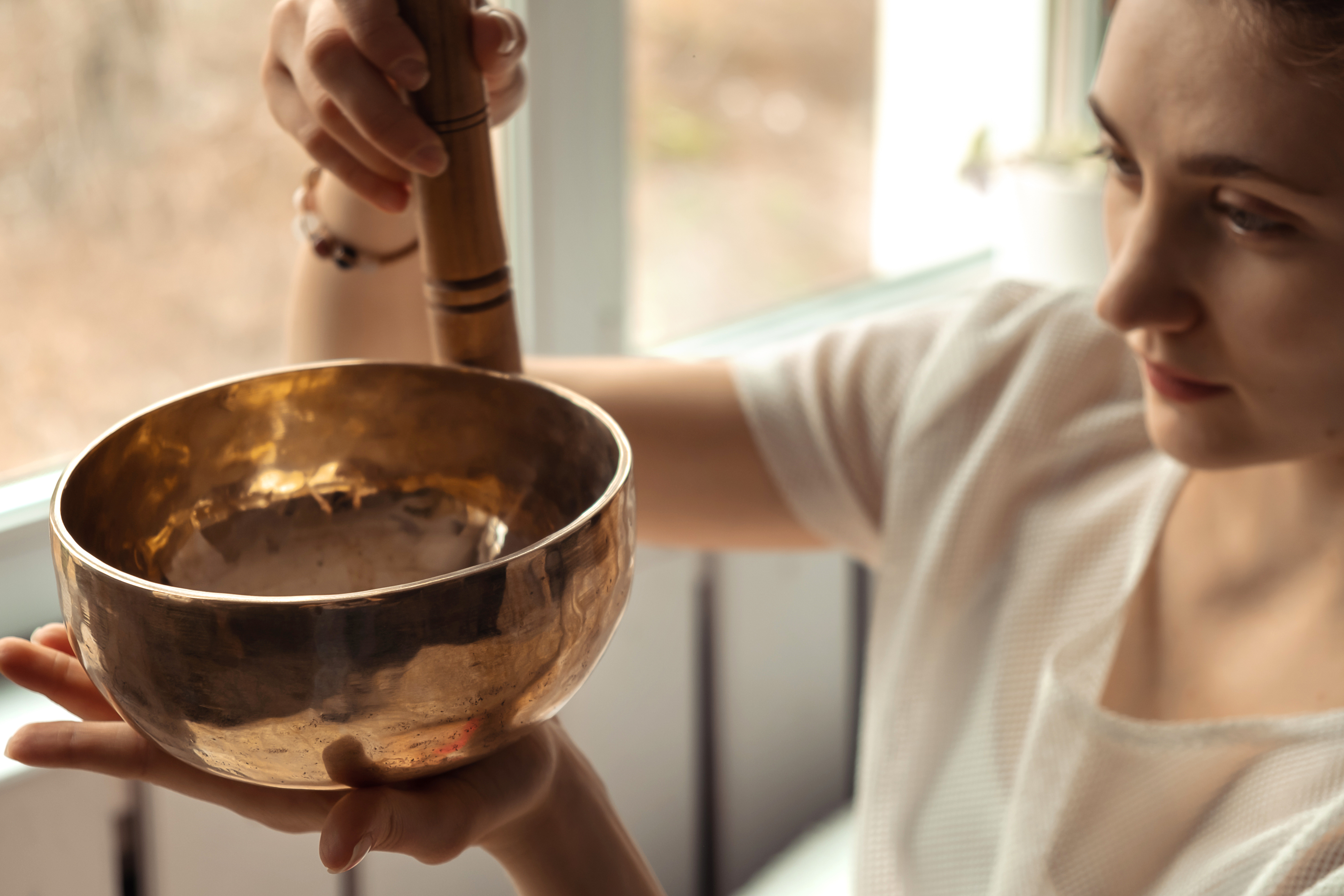
A rich resonant tone filled the room. Soft vibrations lingered as another clear, ringing tone began, creating a layered, harmonious, meditative sound that washed over the participants.
Singing bowls are an ancient healing ritual for reducing tension, balancing energy and relaxation. This session was perfect for stressed-out staff and clients. And it was led by a Shelter client—a woman who had fled her abuser and brought herself and her children to safety.
***
Experts say it takes an average of seven attempts to successfully leave an abusive relationship. Christine’s fourth and last stay at Shelter began late in 2025.
“We had been fighting a lot. And he had gotten another DUI,” says Christine. “He was running me—he worked but he wasn’t paying bills.” In the meantime, she had worked every single day for the previous eight months just to put food on the table for the family.
“He was drunk and abusive,” she says. “But what really crossed the line at the end was that he was doing it to the kids. Especially when I wasn’t looking. One of them even started a cutting behavior.”
Christine first took the children to a relative’s home. But they again encountered abuse, so she made the decision to go to Shelter for Family Safety. Because Christine suffers from a degenerative neurological disease, her immune system is compromised, and she is cautious about any group living situation.
At Shelter, the family had their own room. Christine’s Case Manager was Shay, who she hit it off with very well. “Right away, Shay got me moving and on the right track,” Christine says.
***
“Christine came here with her kiddos seeking shelter after her partner had started out being very verbally abusive, and then he escalated to physical violence as well as strangulation, which is unfortunately very common,” says Shay.
“And immediately she had plans, she knew what she wanted to do. She was just so grateful to have Shelter as an option to stay.”
Shay helped Christine take the steps needed to become self-sufficient, including applying for and ultimately receiving transitional housing and getting connected with vocational rehabilitation. Christine also found a part-time job and got her children into counseling.
“It is a process,” says Christine. “Lots of paperwork and going to various offices. They work together, but you have to wait for these people to get in contact with each other and find you the best option.”
The work was complicated by Christine’s illness. New symptoms appeared even while she was staying at Shelter, and she routinely experienced severe pain, but her disability claims had been denied three times.
“Shay brought me all the applications I needed, so I didn’t have to try to figure out which ones I should or shouldn’t pursue,” Christine says. “It’s hard to look for an apartment online.” Her illness can create cognitive challenges, so Christine was doubly thankful for Shay’s efforts.
Nevertheless, as the holidays approached, Christine was feeling low. “I was thinking, well, we’re obviously not getting out of here before Christmas. I didn’t have anything planned or any activities for my kids. I thought we would be sad, but at Shelter, they don't let that happen. They brought two giant bags full of presents into our room and a big basket full of gifts on top of that,” said Christine.
“And the parting gifts we received when we left were great as well, housewarming stuff, and all the resources they provided. The Shelter is great. They have counseling, the little boutique and they will help you with a bus pass.”
Today, Christine and her children are settled in their new home. She works and has applied for disability again. “What my illness does is to isolate me,” she says. “I went online to find a new path, a career, and thought, well maybe I should volunteer.”
She now volunteers for Better Health, Better Choices, an SDSU Extension program. “I facilitate online workshops to help people manage chronic conditions,” she says. “That’s a huge umbrella—anything from diabetes to Alzheimer's, all kinds of things.”
“Christine has kept a very positive outlook on life,” says Shay. “She had her hard days, but she would turn those negative thoughts into more positive thinking and try to find the joy in even just the small things. It was so great to see her with her kids, just encouraging them.”
“In Shelter, we always say our goal is that we never want to see a client again, because we want them to be successful. But there are some that we definitely miss, and Christine is one of them.”
***
Several years prior, Christine learned about singing bowls from a former co-worker. “She invited me to try a sound bath, and I went and fell in love. And then when I got my diagnosis, I decided that these are part of my healing arsenal.” Christine took classes and became certified in music therapy and sound healing. “I really have a passion for it.”
“I don't know what it was, but even before I came to Shelter, I had it in my head that I wanted to do a sound bath for the ladies there,” she says. “I really wanted to support other women going through the same crap as me. I wanted to also introduce singing bowls to women that maybe have never seen it or heard of it.”
The staff encouraged Christine and created flyers. Shay helped set up the session with approvals from Shelter leadership.
Christine offered two singing bowls sessions at Shelter. She held the first session just before the holidays. Originally, she was focused on helping heal clients, but then she saw that staff could benefit as well. “The staff were getting that caretaker burnout,” Christine said. “I wanted to breathe some life into the staff because that allows them to help the clients.”
“It was very, very intimate and quiet,” recalls Christine. “And it was my pleasure to share that with people. Even the women staying at Shelter said they could feel every note, and they could tell I was feeling it. And I was.”
Christine’s Words to Victims of Domestic Violence
“Your relationship with someone does not determine your worth. Only you are responsible for that, and these people can help you rebuild it from the ground up if needed.”
Christine’s Words to the Community
“For people considering making a donation, this is a service that we cannot afford to lose because those women and men need somewhere safe to go.”