Program Profile: Community Based Services
Posted on January 26, 2021,
Community Based Services General News
If you aren’t sure what Community Based Services means, you’re not alone.
At CHS, Community Based Services refers to services that are provided in the community, as opposed to residential services, which happen on CHS campuses.
“We have historically done work for outpatient services out in the community,” says Sioux Falls Program Director Ondrea Patzlaff.
Prior to COVID-19, services mostly took place in the homes of foster care and adoptive families, primarily during evenings and weekends to accommodate working parents and school schedules. Most meetings have moved to Zoom since the pandemic began.
Specifically, Community Based Services include:
- Therapeutic foster care
- Post-adoption services
- Adoption recruitment for hard-to-place children through Wendy’s Wonderful Kids
Therapeutic Foster Care
“South Dakota has two different levels of foster care,” says Chelsie Ogaard, Black Hills Program Director. “Basic care is licensed and overseen by the South Dakota Department of Social Services (DSS). Therapeutic care takes it a step further.”
“In therapeutic care, we provide more intense and in-depth training to our families. We also offer 24/7 support from their team that knows their family and knows the kids in the home,” Chelsie says.
Children served in therapeutic foster care have a higher level of need. “They may have behavioral concerns, educational deficits or cognitive delays that would require parents to have a little extra support, knowledge and training,” says Chelsie.
Some of the children entering therapeutic foster care are stepping down from residential treatment; in these cases, CHS offers a smooth transition.
Providing direct service is just part of therapeutic foster care responsibilities. “Our therapeutic foster care includes licensing families, case management, policies and procedures, and data collection to meet standards, because we do DSS reviews and Joint Commission (JCAHO) accreditation reviews, just like CHS residential facilities,” Ondrea says.
“That’s in addition to individual therapy, family therapy, family training and family support groups,” she says. “There are a lot of moving parts.”
Post-Adoption Services
Adoption is a topic riddled with misconceptions. In the idealized version of the story, a couple adopts a child, usually an infant, and the family lives happily ever after.
Unfortunately, that’s rarely the case. Adoptive families don’t always fully understand what they’re getting into. Most children who are adopted have experienced trauma, which unless treated will emerge eventually in the child’s behavior.
“Post adoption services at CHS include individual therapy, family therapy, family training and family support groups,” says Ondrea.
“Because we are connected with CHS residential services, we can provide seamless services for a lot of families,” she says. “They don’t have to work with someone new and that’s a huge benefit.”
Ondrea herself adopted a child through CHS which helps her better understand adoptive families. “My daughter will be 20,” Ondrea says. “I met her when she was in residential care. Parental rights had been terminated and she had no place to go.”
Initially, Ondrea’s parents stepped up to provide therapeutic foster care for the child. “Then the conversation turned to permanent options. The adoption was finalized when she was 13,” she says.
It’s been a learning experience for Ondrea. “I talk to parents a lot about the reality of adoption—that even for me, with an education and knowledge of resources and services– parenting kids with trauma is tough.”
“I’ve had to navigate a lot of community resources and even transitioned into adult services with her,” she says. “I’ve gone through various systems and learned about it from the perspective of an adoptive family. So I understand what our adoptive families are going through.”
Wendy’s Wonderful Kids
The Dave Thomas Foundation for Adoption works in the U.S. and Canada to find adoptive families for children in foster care through the Wendy’s Wonderful Kids (WWK) program. The foundation provides grants to agencies for this purpose—and in South Dakota, CHS is the grantee.
“We have a specific set of guidelines, reports, goals and placements for Wendy’s Wonderful Kids,” says Ondrea. CHS has two dedicated WWK recruiters—Tina Graber in Sioux Falls and Anne McGovern in Rapid City.
One of the foundation’s core beliefs is that every child is adoptable. The WWK programs focus on finding families for hard-to-place children—which can include teens, children with special needs and sibling groups.
WWK also shares research and resources with grantees.
Treatment trends
Adoption and foster care are changing fields and Community Based Services staff devote time to staying up to date. One avenue is achieving National Adoption Competency Certification which all staff are pursuing. CHS staff are the only South Dakota adoption therapists to have earned this distinction.
“In foster care, we are trauma-focused, which means understanding where behaviors come from,” Ondrea says. “We look for the cause of the behavior because until we know what’s happened, we can’t help them heal.”
In terms of adoption, the importance of post-adoption services is finally being understood, according to Chelsie. “Our hope and our goal is to be able to provide post adoption services to families prior to crisis. At this point, they’re only being referred into that program when they are considering dissolving the adoption.”
“Families need to understand what they’re getting into when they decide to adopt,” Chelsie says. “Because it’s a lifelong challenge. Kid that are adopted struggle with grief and loss, birth family loyalty, and their identity.”
“They also struggle with their self-concept at each developmental level. That’s just such a foreign concept to most people. For most of us, once you have a sense of self, you’re pretty secure. It’s unfortunately not that way with kiddos that are adopted, particularly if they’re adopted trans-racially,” she says.
“It’s not that a family needs to be the same race as the child, but they need to be willing to learn and understand the child’s cultural background and traditions.”
What’s ahead?
Some of CHS’s most exciting innovations are happening in Community Based Services around the concept of prevention.
Ondrea is working to expand programs to allow for insurance and Medicaid billing. “This would help us reach families that don’t fit into one of our current niches,” she says. “Hopefully, we can work with birth families and with kids before they leave their families.”
“There are a lot of families out there who need our level of service, our information, our expertise—but we can’t reach them right now within the programs we have currently,” she says.
On the other side of the state, Community Based Services is exploring another path to a similar goal.
“Our hope, through the Rapid City Family Project, Family First and other legislation, is to get to families, and to provide them with the support and education they need to prevent children from coming into care,” says Chelsie.
“We’re looking at ideas like—are there ways we can stabilize the birth family? Can children be safe in their homes if we were to provide wraparound, intense in-home support? Can we help the parents develop the parenting skills they need to make sure the family is safe and stable?”
Similarly, Chelsie says, they hope to provide prevention services to adoptive families. “If we could reach adoptive families before they consider dissolving the adoption, we can prevent children from going back into the child welfare system.”
“Ultimately, my greatest wish is that we could work ourselves out of a job,” Chelsie says. “I wish that we didn’t have to exist. But I am proud of the quality of service that we provide because we are necessary.”
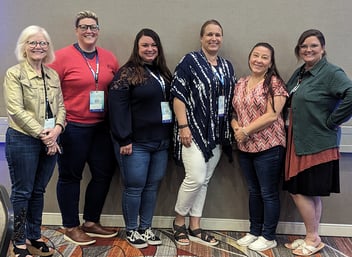
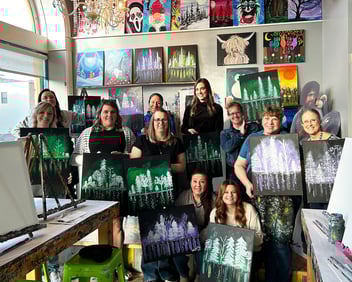
Meet the teams:
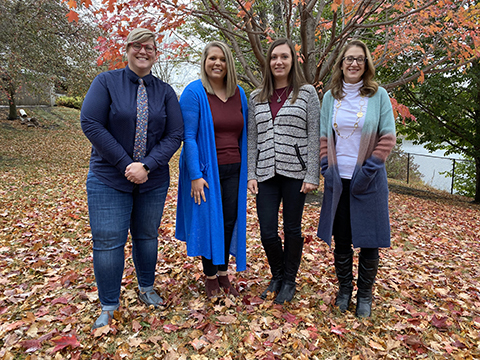
From left to right: Ondrea Patzlaff, Program Director; Vanessa Hoogendoorn,
Adoption Therapist; Tina Graber, WWK/Adoption Specialist and
Angie Smith, Foster Care Therapist
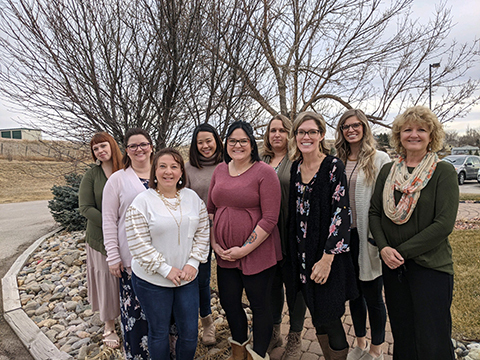
Back row: Lindsay Harris, MSW Intern; Anne McGovern, WWK Recruiter;
Sarah Crawford, Family Engagement Specialist and Dana Vandenberg,
OT Intern
Middle: Chelsie Ogaard, Program Director
Front: Nichole Knepp, Therapist; Heather Boxrud, Community Navigator;
Ann Lecy, Family Development Specialist and Loni Anderson, Administrative Assistant